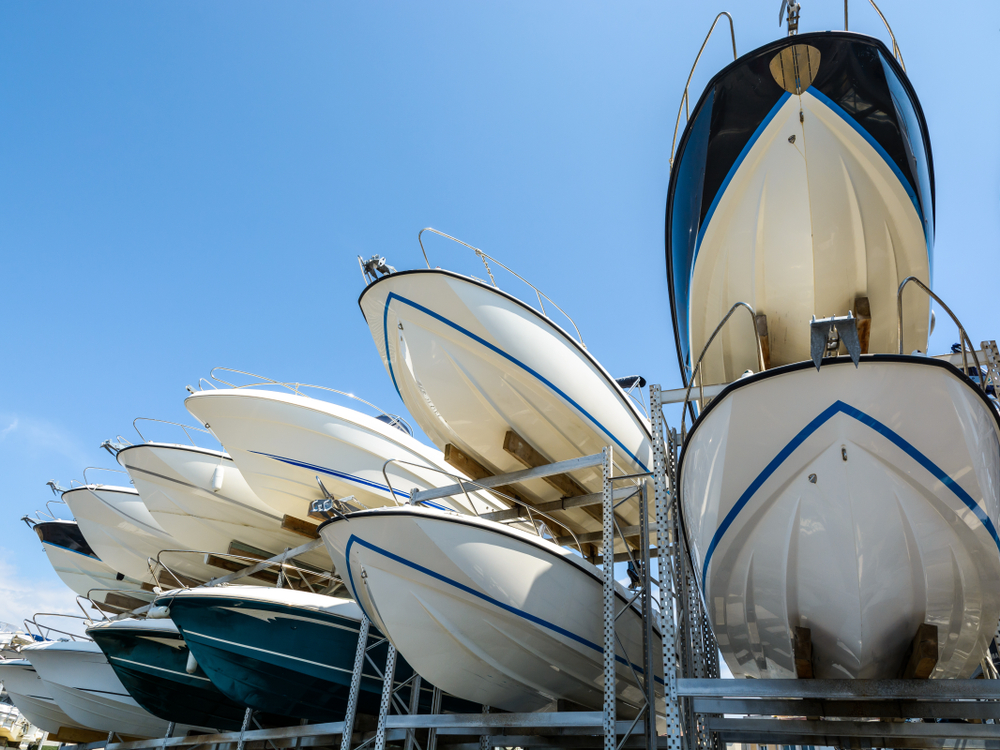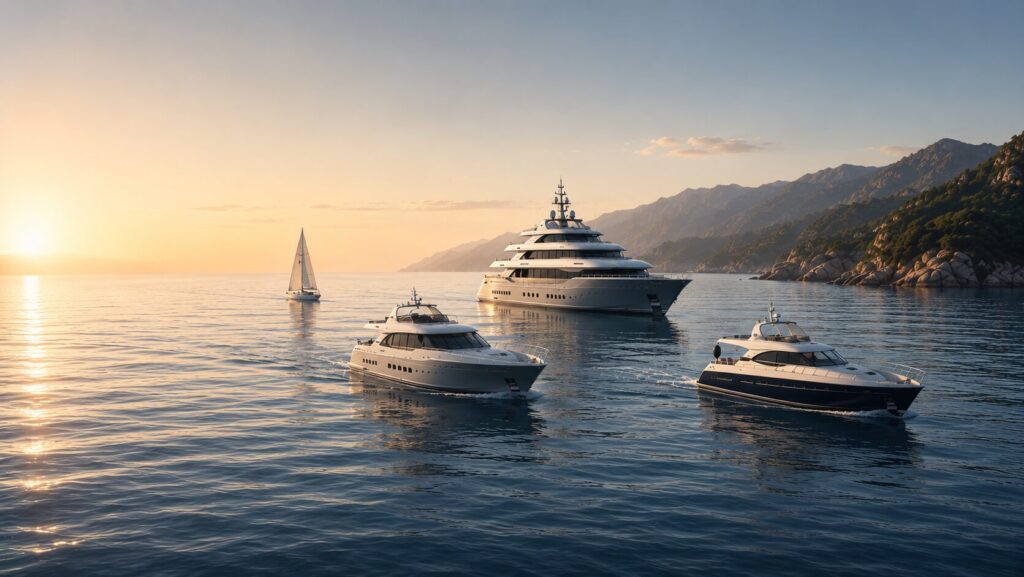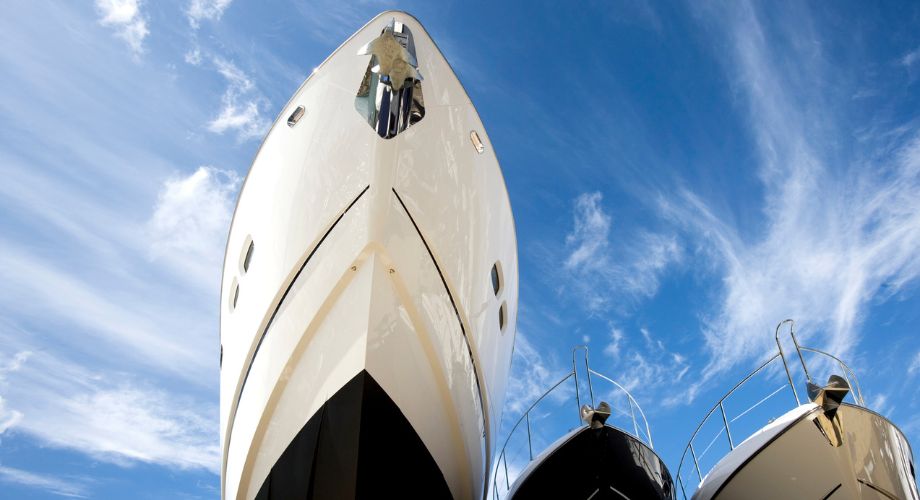
The yacht hull design is the foundation of any vessel, influencing not just how it moves through the water, but how it performs in terms of speed, efficiency, comfort, and safety. In luxury yachting, the yacht hull isn’t just a technical element—it’s an expression of intent. Whether it’s a performance-driven racing hull, a displacement explorer for long-range cruising, or a hybrid hull balancing multiple needs, the hull defines how the yacht will behave in its element.
As buyers and yacht builders look ahead to 2025 yacht launches, there is a growing demand for cutting-edge solutions that offer more than just aesthetics. Owners want quieter rides, lower fuel consumption, better handling, and hulls that integrate seamlessly with advanced onboard systems. Innovations in yacht designs, materials, and technology are pushing the boundaries of what hulls can do—and the future looks sleek, smart, and sustainable.
Overview of Yacht Hull Types
Understanding yacht hull types is essential for any owner or builder. The hull shape determines how it will perform in specific conditions, and whether it’s optimized for speed, stability, or endurance.
Displacement hulls are common in large cruising and expedition yachts. They move through the water rather than on top of it, offering superior range and comfort for long-distance travel. On the opposite end, planing hulls are designed to lift out of the water at high speeds—ideal for sport yachts and chase boats.
There are also hybrid forms like semi-displacement hulls, which blend speed with stability, and multihull options such as catamarans and trimarans that offer space and shallow draft advantages. The sailboat hull segment has also evolved, with deep-V, fin-keel, and lifting-keel options catering to different sailing styles and destinations.
Choosing the right hull of a boat involves balancing use case, speed expectations, sea conditions, and even aesthetic preferences. An experienced yacht designer can help you navigate this decision to suit your vision.
Innovations in Hull Materials for 2025 Yachts
Material science is rapidly transforming new boat designs, especially at the hull level. Traditional fiberglass is now being outshined by advanced composites, carbon fiber, and even sustainable alternatives like basalt fiber or recycled resin blends. These materials are not only lighter and stronger, but also more environmentally friendly.
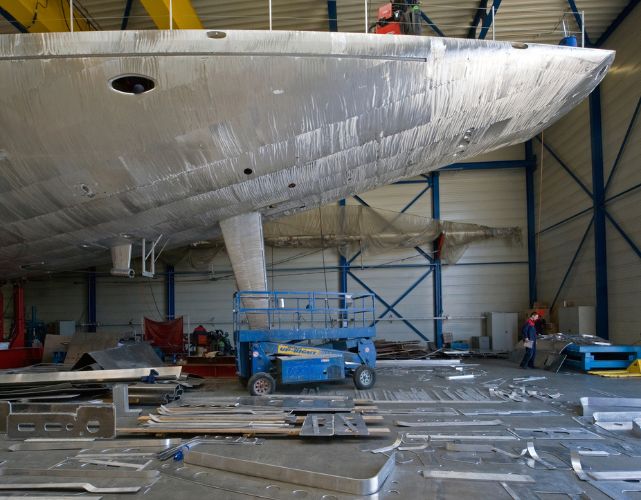
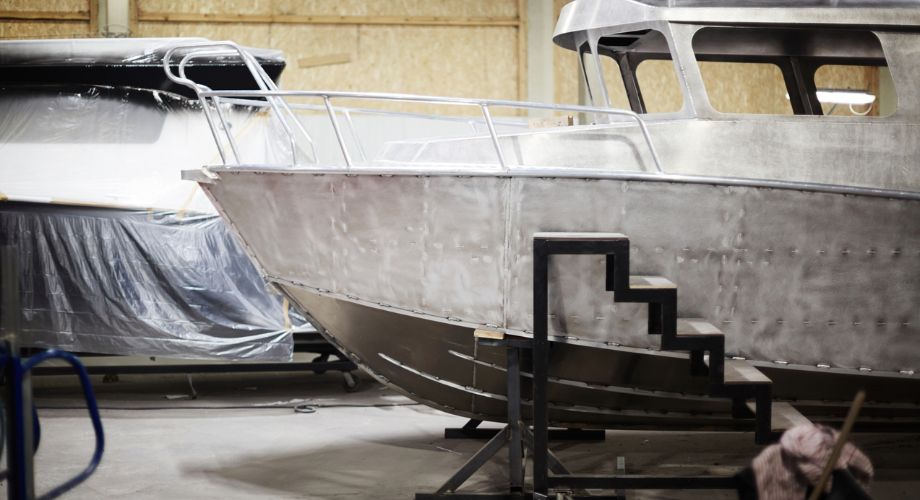
Aluminum continues to dominate in yacht construction management for explorer yachts thanks to its strength-to-weight ratio and corrosion resistance. Steel is still widely used for displacement hulls due to its durability and toughness in ocean-crossing vessels.
For 2025 yachts, material selection is also about integration. Yacht builders are exploring ways to combine hull material choices with new propulsion systems, such as hybrid-electric or hydrogen power, ensuring the vessel is as future-proof as possible. This holistic approach makes the hull a platform for innovation, not just a shell.
The Rise of AI in Yacht Design and Construction
One of the most exciting developments in yacht hull design is the integration of AI yacht design technologies. Artificial intelligence is revolutionizing the design phase, enabling simulation-based optimizations that dramatically reduce the margin for error and accelerate prototyping.
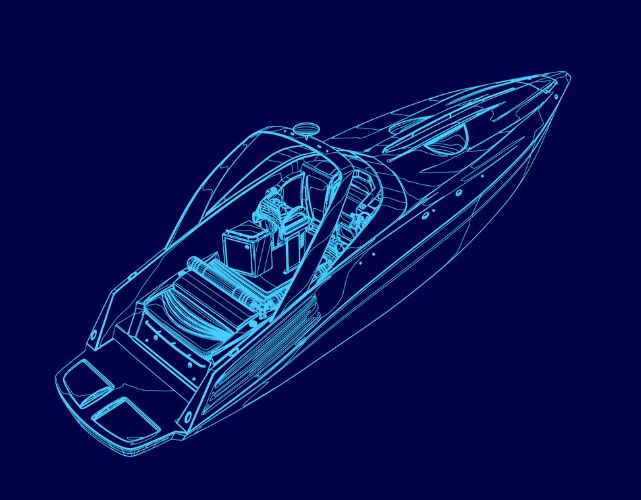
Through AI, designers can test thousands of hull shapes in simulated environments to find the most efficient forms for resistance, drag, and yacht fuel consumption. These simulations also help fine-tune internal layouts, structural stress points, and how the vessel will behave in rough seas—before the first piece of material is even cut.
AI is also becoming a powerful tool in yacht construction management, with real-time performance monitoring, predictive maintenance systems, and digital twins that model the yacht throughout its lifecycle. As owners seek smarter, more intuitive yachts, AI will be a cornerstone of innovation from hull to helm.
Choosing the Right Designer for Your Yacht Hull
To bring your vision to life, it’s crucial to choose a yacht designer who understands your priorities—whether it’s speed, sustainability, luxury, or all of the above. A good yacht designer doesn’t just draw lines on paper; they collaborate with naval architects, interior stylists, and shipyards to translate your vision into a seaworthy form.
Modern yacht designers are not only artists but also systems thinkers. They must understand how yacht hull design affects interior volumes, engine room positioning, and even yachting interior design. The relationship between the hull shape and onboard luxury yacht lifestyle is more interconnected than ever.
When interviewing designers, ask about their approach to hull innovation, material expertise, and how they integrate digital tools like AI or 3D printing. For those building a 2025 yacht, your designer will be your creative anchor from concept through launch.
Construction and Project Management Considerations
Yacht hull design is just the first phase of a much larger journey. Effective yacht construction management ensures that the vision is executed to the highest standards. Yacht hull construction involves precision tooling, quality control, and seamless coordination between engineering teams and suppliers.
As yacht hulls become more complex—incorporating yacht stabilizers, integrated swim platforms, underwater lighting, and energy-efficient coatings—project managers need to oversee timelines, testing, and compliance at every step. Even elements like the layout yacht planning phase must be aligned with the hull structure to optimize weight distribution and usability.
Today’s construction projects often include the yacht owner’s representatives, sustainability consultants, and technology integrators, all working alongside the shipyard. Ensuring your yacht hull design translates into a fully functional, future-ready yacht requires coordinated oversight from concept to completion.

Future-Proofing Your Yacht Hull Design
Future-proofing means designing a yacht that will remain relevant for a decade or more. In yacht hull design, this involves more than performance—it’s about flexibility, sustainability, and adaptability.
Consider yacht hulls that can support hybrid propulsion systems or be retrofitted for future tech. Prioritize materials and coatings that reduce maintenance and environmental impact. Design for modularity, allowing for layout changes or upgrades in the future.
As AI tools become more prevalent and environmental regulations tighten, yachts built in 2025 and beyond will need to be agile. Smart yacht hulls with integrated sensors, data collection capabilities, and performance feedback will become the new norm. The hull is no longer just the base of the yacht—it’s a data-rich foundation for tomorrow’s superyachts.
The Hull Is the Heart of Innovation
In the world of modern yachting, the yacht hull is more than a structure—it’s the intersection of design, technology, and vision. From AI-driven forms to lightweight composites and modular systems, yacht hull design is where the next evolution of yachting begins.
As 2025 approaches, expectations for yacht designs are rising. Yacht buyers demand more personalization, better performance, and environmentally responsible choices. Whether you’re planning a sleek day cruiser or a 60-meter explorer, your hull will shape the entire experience—from motion on the water to comfort on board.
To build a yacht that stands the test of time, start with the yacht hull design. Choose innovation, choose intelligence, and above all—choose a design that reflects your journey ahead.